
About Advanced Dentistry of Amarillo
Advanced Dentistry of Amarillo is a restorative and neuromuscular practice on Plum Creek Drive serving patients from the Tri-State area of Texas, Oklahoma and Eastern New Mexico. Its restorative work is adhesive rather than mechanical: the practice declines to place metal mercury fillings and recommends only porcelain or composite resin, noting that porcelain inlays and onlays remove less tooth structure and are bonded into place. Dental materials science informs each restorative recommendation. A second axis of the practice is temporomandibular joint dysfunction, evaluated through jaw-position and bite analysis and treated by non-surgical means — orthotic appliance therapy, MLS laser therapy, and where a corrected jaw position must be held, orthodontics or restorative crowns and porcelain onlays. Lasers are also used for gingival recontouring, decay detection and bacterial reduction during hygiene visits.
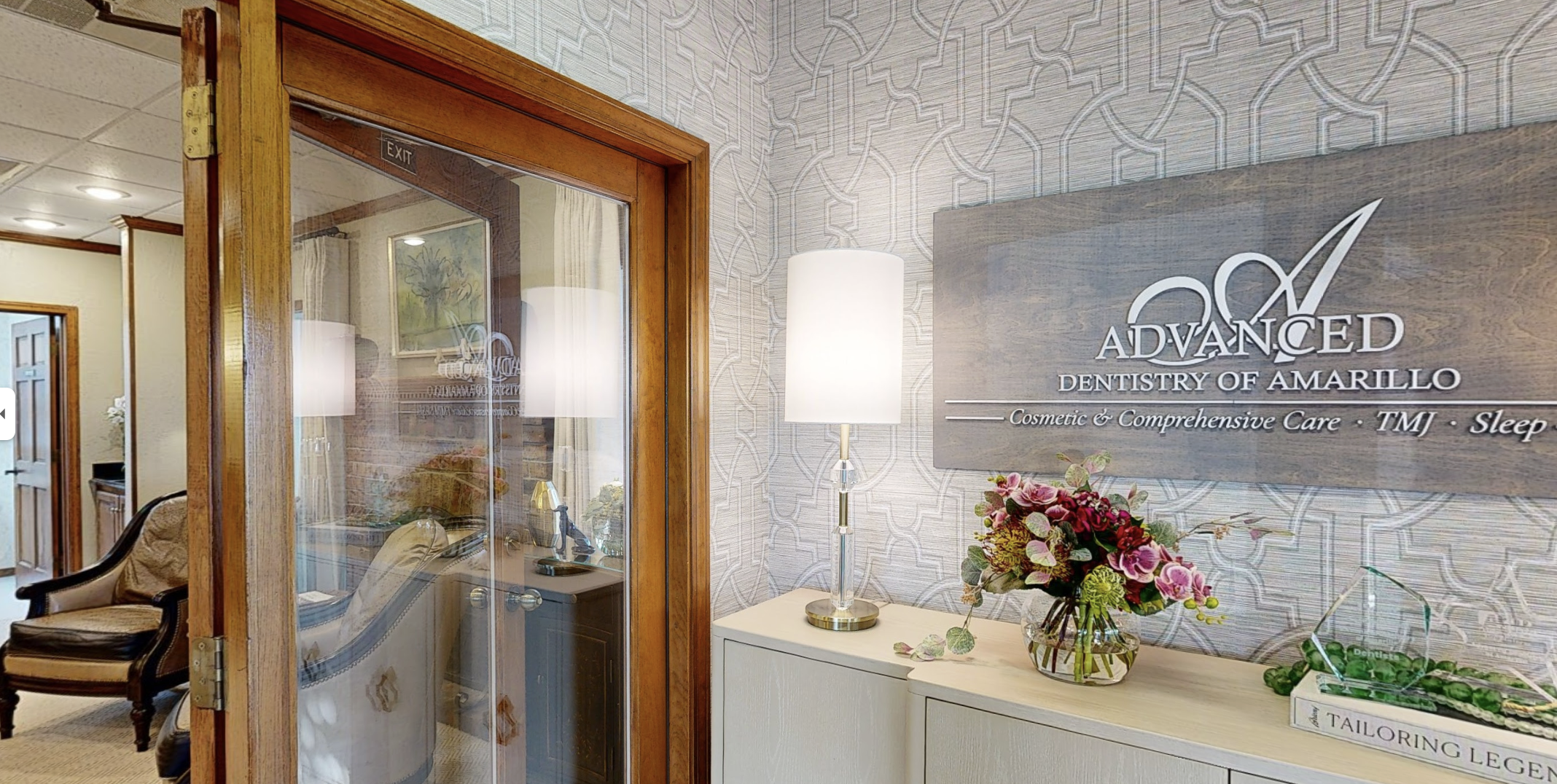

Photos from the practice’s website. Something wrong, or is this your practice? Email hello@biomimeticclinics.com.
Credentialed Clinician
Trey Miller, DDS, FAGD, LVIF
Directory memberIABDM recordverified 8 September 2026
Procedures
Practice Details
- Address: 6834 Plum Creek Dr
- Telephone: 806-358-8021
- Website: https://www.amarillosmiles.com
- City: Amarillo, TX (all Texas practices)
Common Questions
What is the practice's position on amalgam fillings?
The practice does not recommend metal mercury fillings and states that bonded adhesive composite fillings are far superior to them. Only two restoration types are recommended: porcelain or composite resin. Porcelain inlays and onlays involve much less removal of tooth structure, are bonded in, and are used to repair broken or chipped teeth or teeth with large, cracked metal fillings. Composite resin is placed in a single visit and suits smaller restorations.
How is TMJ dysfunction diagnosed here?
Evaluation begins by palpating the joint and surrounding musculature to identify areas of tension driving symptoms, then assessing resting jaw position, how the teeth occlude, evidence of wear from nocturnal grinding, and the opening and closing path. Where further data is needed, a bite test using sonography, 3-D imaging, computerized jaw tracking, MLS cold laser therapy, TENS, electromyography and computerized bite analysis is recommended to capture the neuromuscular position.
What does TMD treatment involve after the evaluation?
A customized orthotic resembling a mouthguard may be fitted to hold the resting bite in the neuromuscular position while symptoms resolve. MLS laser therapy, a multi-wave system used in ten-minute sessions, is applied for pain management and to relax musculature before the restored bite is taken. To stop the jaw returning to its prior position, orthodontics or restorative work such as crowns and porcelain onlays may follow.
How does the practice handle laboratory-fabricated restorations?
The practice uses an invitation-only dental laboratory that accepts dentists meeting defined qualifications and submitting a certain standard of cosmetic work. The technicians fabricating the restorations have completed the same cosmetic and neuromuscular functional training as the practice's dentist, so restorative design is coordinated between clinician and laboratory on both function and form.
What should patients travelling to Amarillo for treatment expect?
The practice treats patients who travel in for cosmetic care, TMJ and bite correction work, and publishes local hotel and dining recommendations for those visits, including downtown options and a restaurant in southwest Amarillo nearer the office. Appointment time is spent establishing the patient's own treatment goals before care proceeds.